
Last year was another enjoyable and edifying year of reading. Whittling this list down to 10 books was actually quite difficult, but here goes….
The Nicene Creed: Phillip Cary

Concise, biblically faithful and thoroughly protestant, Cary’s introduction to the Nicene Creed is exceptional and makes for a great devotional read.
Remaking the World: Andrew Wilson
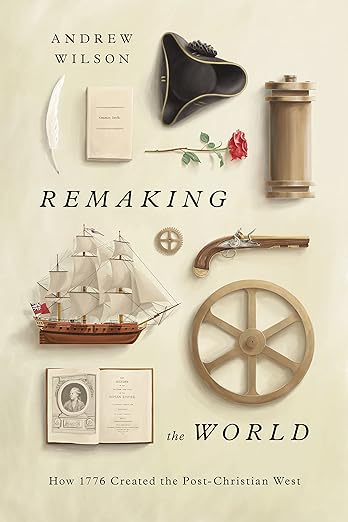
I could not put Andrew Wilson’s “Remaking the World” down. Wilson traces how our modern cultural moment came to be and the results are particularly relevant for Christians today.
Augustine: Peter Brown

Finally got around to reading Peter Brown’s famous bio on Augustine. More than half a century later, Brown’s seminal work on the brilliant Bishop of Hippo is remains unmatched. One of the best biographies I have ever read. Stunning.
Slow Productivity: Cal Newport
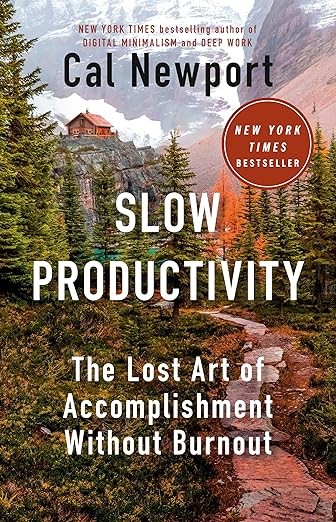
A sequel of sorts to his best-selling Deep Work, Cal Newport has created a book encourages us all to take a deep breath and re-think what true it means to be “productive”. Busy leaders will find Slow Productivity a welcomed tonic for a over-busy age.
The American Revolution: Gordon Wood

I love Gordon Wood. I also love reading anything on the American Revolution. I also love book cover’s that do not look like they were designed by a 2nd grader. 2 out of 3 aint bad I suppose. Jokes aside, this is very useful, short (most history is not) and altogether excellent intro to the war that formed the America we know today.
On the Apostolic Preaching: Irenaeus

On the Apostolic Preaching by Irenaeus of Lyons is a foundational work of early Christian theology. Written in the 2nd century, it serves as one of the earliest examples of what we today call “biblical theology”. I try to keep early church sources in my reading rotation and this was my favorite of the bunch in 2024.
Taught by God: Brandon D. Smith

How did the early church understand their Bibles? This is the question Brandon Smith is asking in “Taught by God”. The book unpacks the differences in our modern-western, post-enlightenment hermeneutics and the pre-modern hermeneutics of the early Fathers.
Tolkien Dogmatics: Austin Freeman

If you love Tolkien (as I do) and you love reading systematic theology (as I do) then you will love Austin Freeman’s Tolkien Dogmatics. As an evangelical, Freeman is (rightly) critical of Tolkien’s Roman Catholicism in places but generally he lets Tolkien speak for himself and unpacks the belief structure beneath the lore of Middle Earth.
Christianity and Liberalism: J. Gresham Machen

J. Gresham Machen’s Christianity and Liberalism is a defense of historic, biblical Christianity against the rise of theological liberalism in the early 20th century. Machen argues that liberalism is not merely a different expression of Christianity but an entirely different religion altogether and today, over a century after its original publication, Machen’s argument has never felt more relevant. I recommend the 100th Anniversary edition for Kevin Deyoung’s excellent forward.
Why God Became Man: Anselm of Canterbury
Most protestants have read little from the Medieval Church but Anselm is worth exploring. He wrote Why God Became Man (Cur Deus Homo) between 1094 and 1098 while serving as Archbishop of Canterbury and in the book Anselm presents a rational and biblical argument for why God, in His justice and mercy, had to take on human flesh to redeem sinners. He articulates the satisfaction theory of atonement, asserting that only the God-man, Jesus Christ, could offer a perfect and sufficient payment for humanity’s sin. A brief but edifying introduction to one of the top tier theologians of the Middle Ages.
Happy Reading!



 Develop to Deploy
Leave a comment