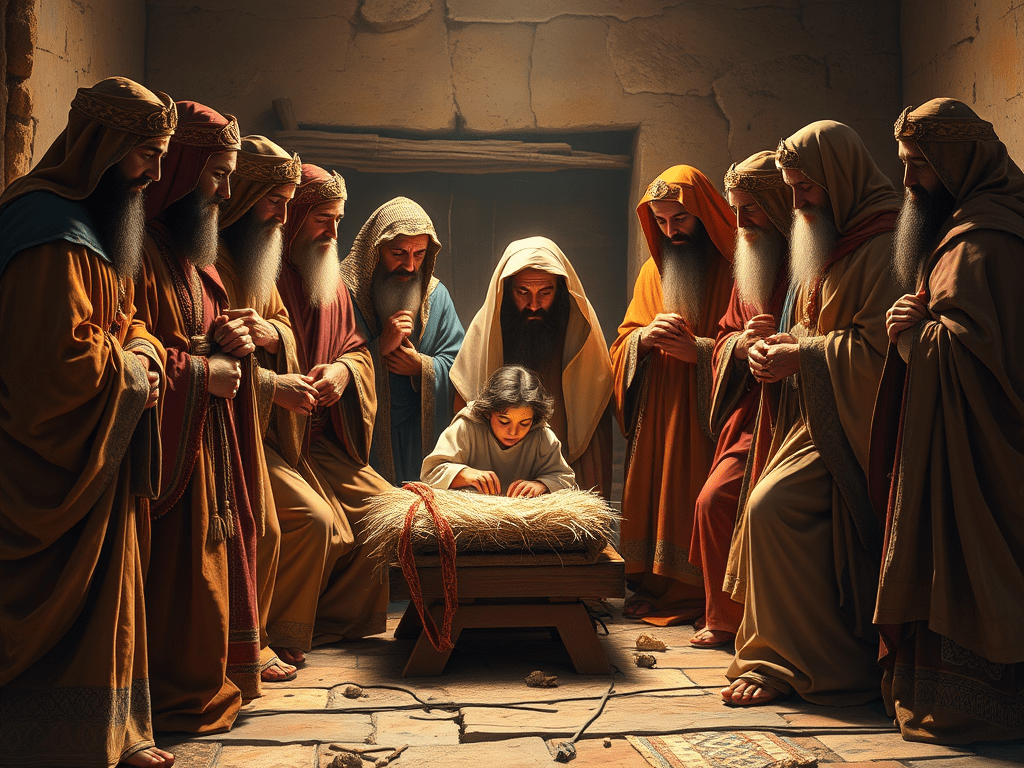
The story of the Wise Men, or Magi, in Matthew 2:1-12 is one of the most beloved aspects of the Christmas narrative. However, it is also one of the most misunderstood. Here are some common misconceptions about these mysterious visitors and the truths behind them, as highlighted in “The King of Christmas.”
1. There Were (probably) Not Three Wise Men
The popular image of three Wise Men is based on the three gifts they brought: gold, frankincense, and myrrh. However, the Bible never specifies their number. There could have been three, or there could have been a dozen or more, accompanied by a large entourage. In fact, given their importance as “kingmakers” in their culture, they likely traveled with a significant group for protection and prominence.
2. The Wise Men Were Not Kings
Despite the famous carol “We Three Kings,” the Magi were not kings. They were part of a hereditary priesthood from the Persian Empire, similar to the Levites in Jewish tradition. They were spiritual leaders, astrologers, and scholars, often tasked with selecting and anointing new kings. Their role as kingmakers, rather than kings themselves, emphasizes their importance in the ancient world.
3. They Did Not Visit Jesus at His Birth
Most nativity scenes and Christmas plays show the Magi visiting Jesus in the manger alongside the shepherds. However, Matthew 2 indicates that their visit occurred much later—likely when Jesus was 18 to 24 months old. By the time the Wise Men arrived, Jesus and His family were living in a house in Bethlehem, not a stable.
4. Their Gifts Were Not Only Symbolic
While the gifts of gold, frankincense, and myrrh carry profound symbolic meaning—representing Jesus’ kingship, deity, and eventual death—they were also immensely practical. The value of these gifts likely financed the Holy Family’s flight to Egypt to escape Herod’s wrath. (See Matthew 2)
The story of the Wise Men is a beautiful reminder of God’s sovereignty in bringing people from distant lands to worship His Son. It also teaches us to approach Scripture with care, letting it inform our traditions rather than the other way around. The Magi’s journey reflects the call for all people—Jew and Gentile alike—to come and worship the true King, Jesus Christ.



 Develop to Deploy
Leave a comment